When Play Happens in The Margins
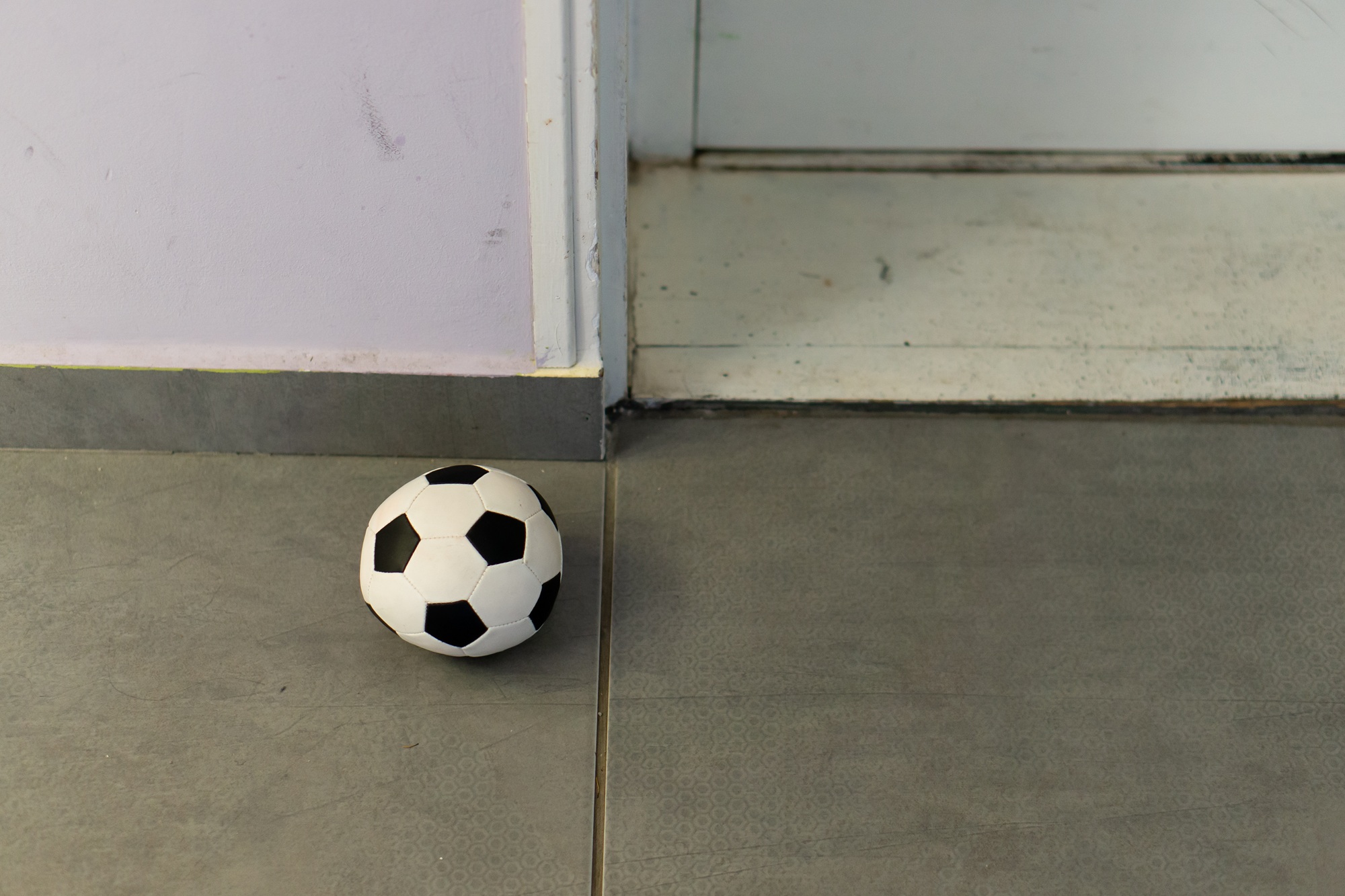
Where Joy Shows Up Without Invitation
Play is often imagined as something that needs to be planned. A block of time set aside, materials gathered, attention fully focused. But for many families, that version of play is rare. Life doesn’t pause neatly to make room for it. Instead, play finds its way into the margins, between responsibilities, during transitions, in the small spaces most people overlook.
The margins are not abstract. They are real places children inhabit every day: cars, hallways, shelters, shared rooms, small apartments, waiting rooms, sidewalks. They are spaces shaped not by choice, but by constraint—by limited time, limited money, limited room. These are the places children occupy when systems fail to provide enough space for rest, safety, or ease. Children do not stop playing in these places. They adapt their play to them.
You may notice it while dinner cooks and a child turns spoons into instruments. While waiting for an appointment and a game emerges from observation alone. During cleanup, when a chore becomes a competition, or a joke. These moments don’t announce themselves as play. They arrive quietly, fold themselves into what’s already happening, and disappear just as gently as they came.
We often underestimate this kind of play because it doesn’t look intentional from the outside. There is no clear beginning or end. No preparation, no outcome to point to. But play that lives in the margins carries a particular kind of freedom. It doesn’t have to succeed. It doesn’t have to last. It doesn’t even have to be repeated. It exists simply because there is space for it.
Children are especially skilled at finding play this way. They read the room. They sense when there is a pause, a waiting moment, a gap between one thing and the next. In these spaces, imagination steps in.
The Role of Imagination
Imagination is what allows marginal play to transcend objects, space, and cost. When materials are limited or absent, imagination does not compensate for what’s missing, it expands what’s possible. The floor becomes terrain. Conversation becomes a game. An ordinary object loses its fixed purpose and invites reinterpretation. Because imagination lives inside the child rather than in an object, it travels easily. It can surface anywhere, attach to almost anything, and return whenever there is space. This is why play in the margins often feels richer than play dependent on materials, it is powered by agency, not supply.
Play’s Dual Role
This kind of play does more than express creativity. It plays a quiet developmental role as well. When children imagine freely, especially in unstructured, relational moments, they are practicing flexible thinking, problem‑solving, language, and emotional regulation. Their cognition is expanding, even when the activity appears small. For children with disabilities or neurodivergence, marginal play can be especially powerful because it adapts to the child rather than demanding the child adapt to a structure. There are no wrong answers, no timelines, no expectations to meet. Development unfolds inside safety.
The Cost of Adaptation
That adaptation carries a cost. Children who play in the margins often learn early how to compress themselves, to keep games small, to quiet their bodies, to scan for permission before taking up space. They become skilled at flexibility, but flexibility is not the same as ease. Naming this cost matter, not to diminish children’s resilience, but to refuse the idea that adaptation happens without weight.
Systems That Create the Margins
These margins are not natural conditions of childhood. They are shaped by housing precarity, economic inequality, overcrowded institutions, and social systems that leave families to absorb structural shortfalls privately. Children do not choose these conditions. Most parents do not either. Yet within them, families still find ways, small, intentional ways, to protect moments of joy.
Pockets of Safety Parents Create Anyway
When parents allow play to emerge in the margins rather than shutting it down, they are doing more than permitting noise or movement. They are creating pockets of emotional safety inside environments that often feel compressed. These moments say, even here, you are allowed to be a child. Play does not erase hardship, but it softens its edges.
The Enduring Dignity of Play
Play holds intrinsic value. It is not only something children do, but also something humans return to throughout their lives as a way of connecting and belonging. In childhood, low‑cost, marginal play allows friendships to form without hierarchy or performance. Laughter, shared rhythms, and inside jokes grow naturally. These capacities do not end when childhood does. The ability to play, to engage others with curiosity and flexibility, becomes a lifelong social skill, shaping relationships well into adulthood.
When life is hard, play becomes protective. It offers children emotional continuity and teaches them something profoundly stabilizing: that joy does not disappear when circumstances narrow. That connection does not depend on abundance. And that being with others can be enough.
Play that survives constraint is not lesser play—it is the way children preserve their dignity when the world narrows around them.
This essay is part of the Everyday Life section of The Children’s Planner, which explores how children experience joy, growth, and belonging within the ordinary realities families navigate each day.